Originally published on April 17, 2026 in The Saudi Times.
Read the original article →
By Johann Jenson, reporting from FII PRIORITY Miami for The Saudi Times.
Johann Jenson is Founding Partner of NIAS.io, a Saudi-focused investment platform and network of private offices and institutional capital allocators.
The 4th edition of the Future Investment Initiative Institute’s FII PRIORITY Miami was not simply another investment conference. It increasingly acted as a geopolitical coordination point where the next architecture of global capital is being shaped.
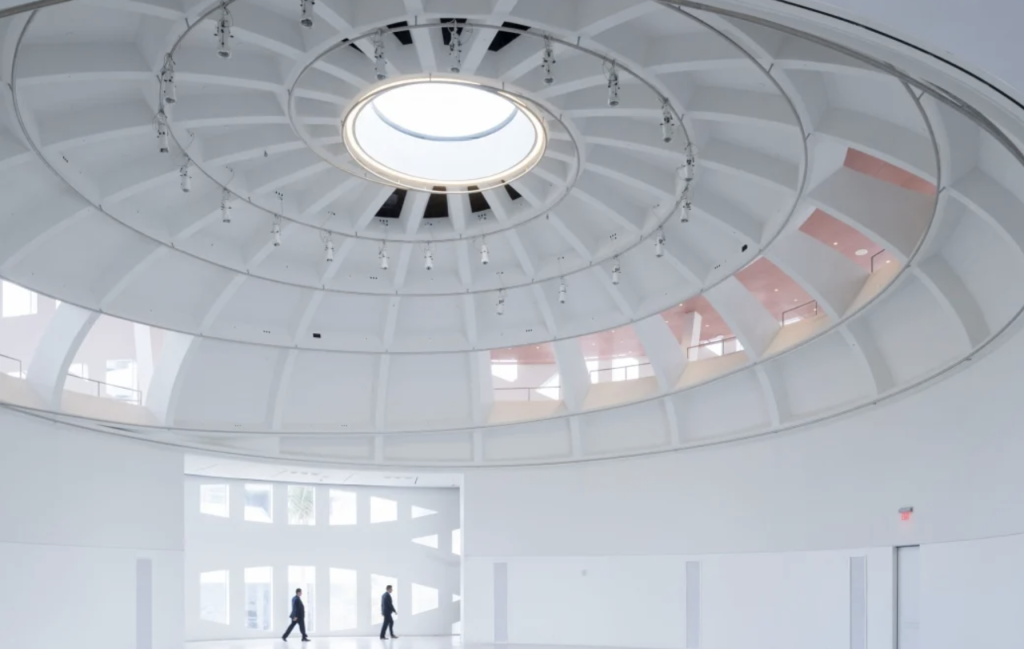
Not architecture in the physical sense, though the Art Deco backdrop of Miami’s iconic FAENA Hotel & Forum provided plenty of that, but architecture in the capital-markets sense: who is structuring what, with whom, and around which platforms for the next phase of growth.
That, to me, was the real story in Miami.
Capital is no longer simply moving across borders. It is being designed into new systems of participation. And increasingly, Saudi Arabia is not just part of that picture. It is helping shape the frameworks through which global capital now moves.
Richard Attias, Chairman of the Executive Committee and Acting CEO of FII Institute, framed it well when he described FII as “a platform where ideas move, capital connects, decisions are shaped, and the future is not merely discussed but actively designed by leaders coming together.” That felt especially true in Miami, where the most important signals were often forming around the sessions rather than on stage.
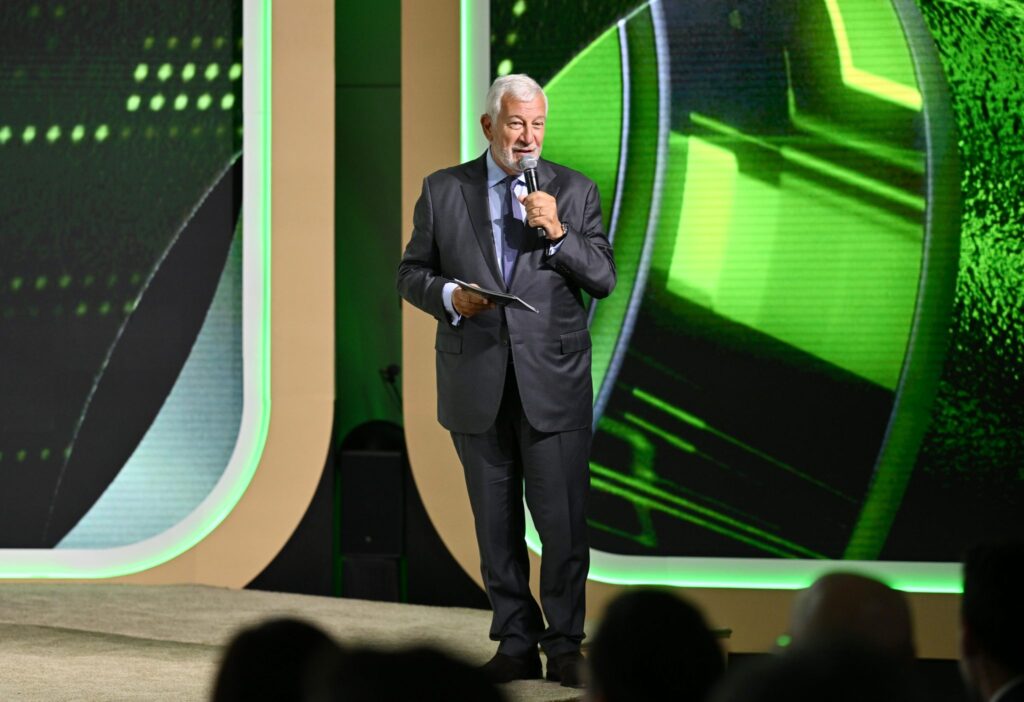
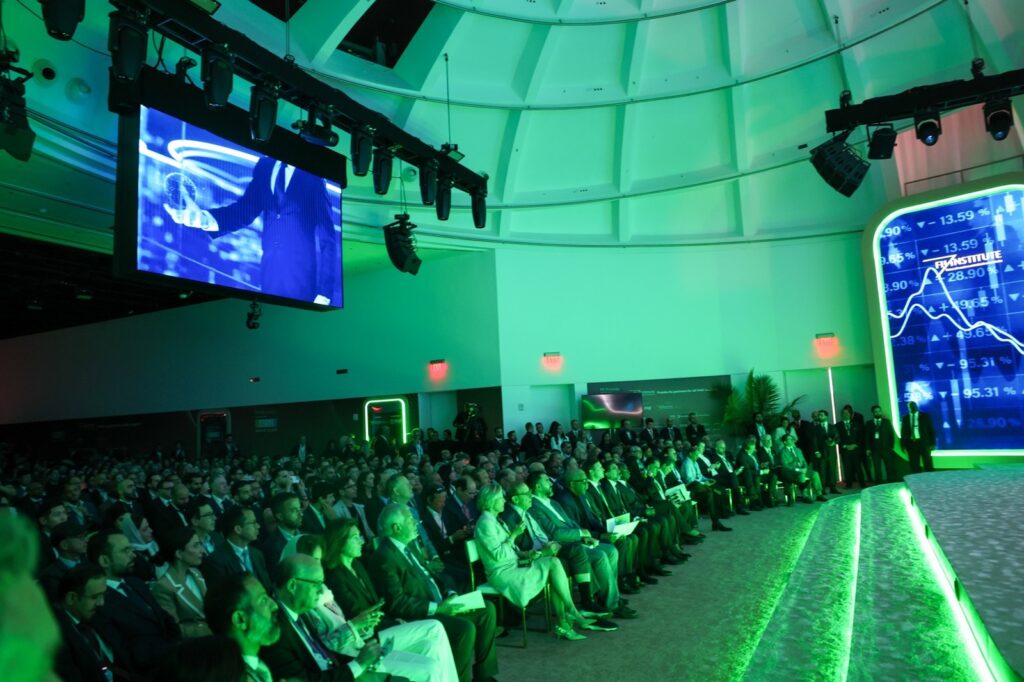
The mix of participants reflected that shift. Miami brought together U.S.-based regulators, allocators, operators, technologists, and family offices who may not normally travel to Riyadh. There was less focus on who had capital, and more focus on who understood where the system was moving.
Several senior Saudi ministers who would normally have attended were unable to travel due to the evolving situation in the Gulf. Even so, participation from more than 300 FII members including 2,000 diplomats, investors, private office principals, and technology leaders from around the world underscored how engagement around the Kingdom’s transformation is increasingly being carried forward across institutional and private-sector channels alike.
The presence of Ambassador HRH Reema bint Bandar Al Saud alongside senior representatives from U.S. and Gulf institutions reflected how economic dialogue around the Kingdom’s transformation continues to deepen alongside diplomatic coordination.
Voices from the Floor
Tala Al Jabri, Managing Partner of Wyld VC, a firm backing AI-native companies with a presence in the Middle East and the United States, told The Saudi Times:
“Even with the recent political happenings in the background, investor confidence in opportunities in Saudi Arabia remains strong, especially around AI. Building bridges between ecosystems is now essential, and alignment between American and Saudi founders and investors is strengthening.”
Gayatri Sarkar, founder and CEO of Advaita Capital, a growth-stage venture firm investing in frontier technologies including Neuralink, xAI, and Cohere, told The Saudi Times that FII reflects the depth of the long-term partnership between Saudi Arabia and the United States.
“Cooperation today goes far beyond traditional diplomacy. It increasingly includes physical AI, next-generation chips, space innovation, and biotechnology. The Kingdom’s long-term commitment to technology development gives venture capitalists like us hope and confidence to expand partnerships across Saudi Arabia.”
That shift in tone reflects a larger one in the market. A few years ago, conversations about Saudi Arabia often centered on outbound capital, giga-project headlines, or sheer scale. In Miami, the discussion had matured. The emphasis now is increasingly on participation: how others invest alongside Saudi, through Saudi, and increasingly into platforms being built in the Kingdom.
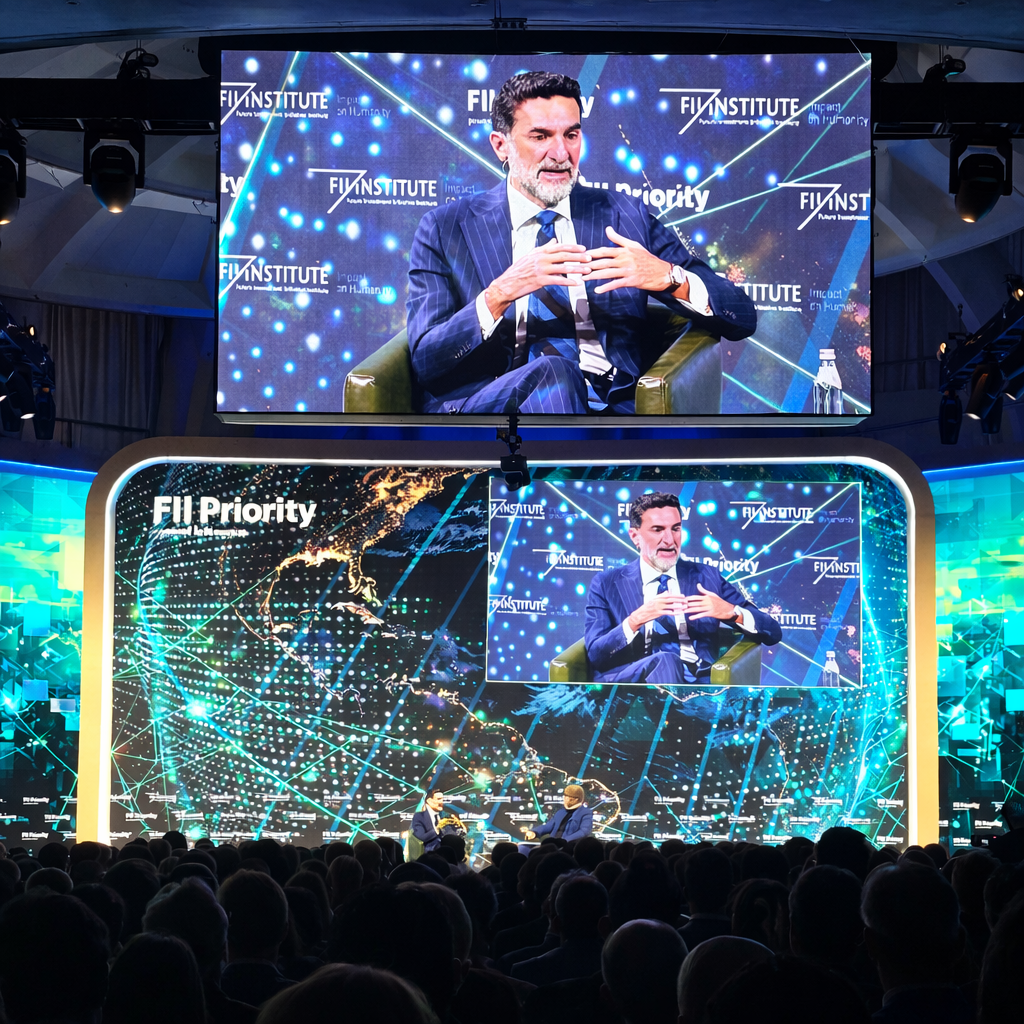
“It was important for us to be present at FII PRIORITY Miami to represent both our group and the broader Saudi private sector. These platforms are no longer just about ideas, but about turning partnerships into tangible outcomes.”— Private Sector Participant
A key conversation I had was with Ibrahim Al-Moammar, Chairman of Al Moammar Information Systems (MIS). He noted: “Our focus is increasingly on building the next generation of infrastructure required for this transformation. That includes supporting the energy transition, enabling manufacturing capabilities, and advancing real estate development through public-private partnerships and joint ventures.”
The Saudi private sector is no longer adjacent to the transformation. It is increasingly one of the vehicles through which the transformation is being implemented.
Infrastructure, AI, and the Energy Layer
Infrastructure and resilience remain the backbone of all of this. H.E. Mohammed Al-Jadaan, Minister of Finance of the Kingdom of Saudi Arabia referenced the recent operational use of the East-West crude oil pipeline, built four decades ago, as a reminder that physical infrastructure still underpins long-term competitiveness even as attention shifts toward artificial intelligence.
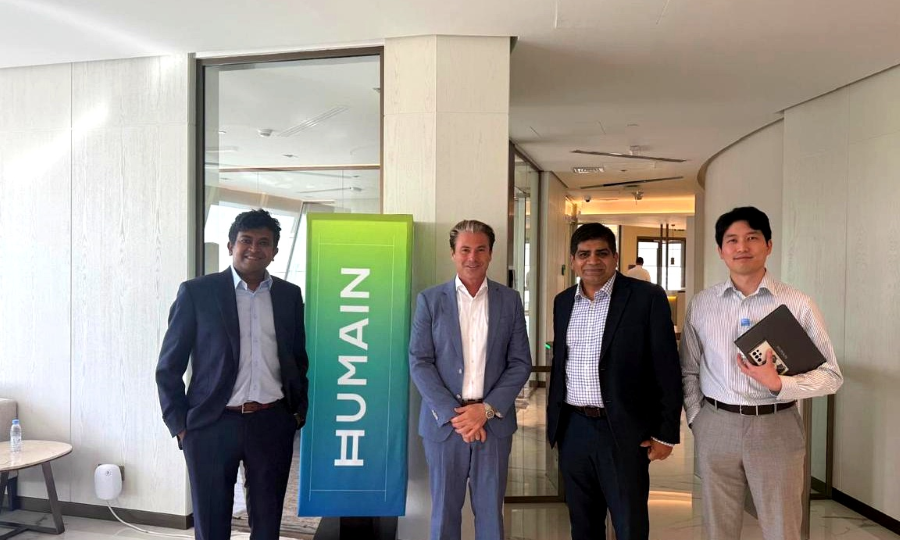
Across sessions, AI was treated less as a sector and more as a capability layer. Leaders from PIF, HUMAIN, and NEOM emphasized that serious investors are now focusing on compute, deployment environments, workforce adaptation, and above all energy.
Tareq Amin, Chief Executive Officer of HUMAIN, told The Saudi Times:
“To really excel in AI, there’s a core component that one must have: energy. Saudi Arabia could really excel at that.”
His remarks reflected a growing recognition across discussions in Miami that the next phase of AI competition will be shaped not only by models and software, but by access to power, compute infrastructure, and deployment-scale capacity.
One participant summarized the mood nicely: you can have the best algorithms in the world, but if you do not have the energy infrastructure to power them, none of it matters.
That line stayed with me because it gets to the heart of what many still underestimate. The AI cycle is not just a software cycle. It is an infrastructure cycle. And increasingly, it is a physical infrastructure cycle.
Ibrahim Neyaz, Chief Executive Officer of the National Technology Development Program (NTDP), emphasized that attracting talent, strengthening local capabilities, and building innovation platforms are all essential if advanced technologies are going to translate into real economic opportunity. Capital alone is not enough without the surrounding capability.
Some investors raised practical questions about execution bandwidth, compute access constraints, chip supply sensitivity, and the rising energy intensity of large-scale AI deployment. What stood out, however, was that Saudi Arabia is addressing these challenges as a system rather than as isolated sector issues, aligning energy capacity, industrial strategy, regulatory adaptation, and capital formation in parallel.
Domestically, sustained non-oil growth, the expansion of local asset-manager platforms, and technology programs led by MCIT, NTDP, and HUMAIN point to a coordinated effort to build frontier capability in parallel with infrastructure deployment.
When Worlds Converge
Another comment that stayed with me came from Waterloo-based theoretical physicist Dr. Sabrina Pasterski, often described as one of the leading voices in next-generation gravitational physics. She noted how unusual it still is to see science, capital, and policy brought together early enough to shape real collaboration rather than react to it later. Frontier theory, applied AI, advanced manufacturing, robotics, and both sovereign and private capital are no longer operating in separate worlds. They are increasingly converging into a single value-creation chain.
Similar themes emerged across discussions involving research leaders from Columbia University and MIT Sloan.
And that, ultimately, may be the biggest takeaway from Miami.
AI is already compressing parts of the knowledge economy. Physical AI, increasingly through robotics, will extend that shift into the industrial economy and parts of highly skilled labor once considered insulated. The distance between invention, production, deployment, and monetization is shrinking rapidly. The supply chain of value creation is collapsing inward.
When that happens, strategic capital deployment matters more. So do technology infrastructure and trusted relationships. Yet energy matters most of all.
Because none of this scales without power.
That is why the Kingdom will be central to this next phase. Saudi Arabia has the ambition, the balance sheet, the institutional will, the energy advantage, and increasingly the ecosystem to become one of the places where this new stack gets built.
From inside the conversations in Miami this year, that no longer felt theoretical. It felt in motion.
Reporting from FII PRIORITY Miami this year, The Saudi Times observed a consistent shift across conversations with investors, policymakers, and operators alike: the next phase of global capital formation is already being structured through partnerships emerging around the Kingdom. As these platforms continue to develop, FII is increasingly where those relationships first become visible and where the architecture of the next global investment cycle is already beginning to take shape.